


Novelvio - Read & Earn
4.531.00 Reviews
App Specs
- Version
- 1.3.3
- Updated On
- License
- Free
- Downloads
- 50,000+
- Developer
- Feel Refreshed Studio Limited
- Categories
- Entertainment
- Platform
- Android
Screenshots


 Analysis by AppCompare
I approached Novelvio as an entertainment app with one clear promise: it combines reading popular novels with tasks and rewards. That combination is more interesting than a standard reading app because it gives me another reason to return after a chapter, but it also changes what I expect from the experience. I am not only asking whether the stories are enjoyable; I am also watching how naturally the reading and reward sides fit together.
In my experience, the strongest idea here is the connection between reading novels and completing tasks. Many reading apps focus entirely on keeping a book open, while reward apps usually send me from one unrelated activity to another. Novelvio sits between those habits. I can spend a quiet moment with a story, then look for a task when I want a more active way to continue using the app.
That makes it especially appealing if you already enjoy serialized fiction and like having small goals during casual phone time. It is less convincing for someone who wants a pure, distraction-free ebook reader or expects rewards to replace the entertainment value of the stories. The app works best when I treat the rewards as an extra incentive rather than the main reason to read.
Reading becomes the center of a small reward loop
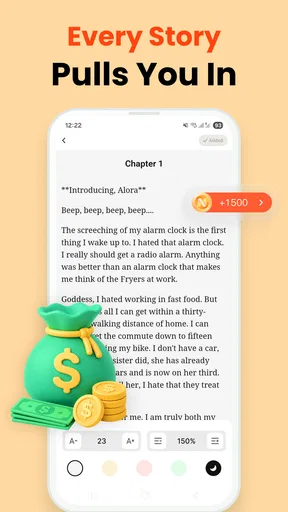
The central capability is simple to understand but meaningful in daily use: Novelvio lets me read novels, complete tasks, and earn rewards within the same entertainment experience. The reading is not merely decoration around a points system. It gives the app a reason to feel more personal than a generic task platform, because the activity begins with choosing a story and deciding how much time I want to spend with it.
This structure changes my behavior in a subtle way. With an ordinary novel app, I might open a book only when I already feel like reading. Here, the task-and-reward layer can encourage me to check in even when I have only a few minutes. That can be useful during a commute, while waiting for an appointment, or at the end of the day when I want something lighter than a full game.
The important distinction is that the reward loop does not automatically make every story more enjoyable. If I dislike the available novel or feel that the task interrupts the reading rhythm, the incentive becomes less helpful. I found the concept most appealing when the story itself held my attention and the reward system gave me a small reason to keep going, not when I tried to force myself through text just to reach the next benefit.
As an app in the entertainment category, it is aimed at relaxed, repeat use rather than serious study. That matters when deciding whether it belongs on your phone. I would recommend it to readers who like accessible fiction and enjoy progress-based motivation. I would not choose it as my only reading tool if I need advanced book-management features, a quiet literary environment, or a replacement for a dedicated ebook library.
Worth Reading Before You Choose

Flipboard Shows What News Apps Must Do Beyond the Feed

Switching to Android Auto Means Rethinking Your Driving Routine

Google Calendar Makes a Crowded Week Easier to Manage

Ludo King Makes the Most of the Minutes Between Plans

Baby Panda World Brings Quick Play to Modern Phones, but Its Game Library Feels Busy

ESPN’s Live Game View Makes Following Close Games Easier
What the reading-and-task combination feels like
The most useful way to approach Novelvio is to separate two intentions before opening it. If I want to read, I choose a novel and give the story my attention. If I want to work toward a reward, I look at the available tasks and decide whether one fits the time I have. This small distinction prevents the app from feeling unfocused.
For example, I might open it during a short break and read only a little because I know I will be interrupted. Later, when I have more time, I can return to the task side rather than starting a new story impulsively. This makes the app easier to use in fragments than a traditional book, where losing concentration can make a short session feel unsatisfying.
My practical tip is to avoid treating every task as mandatory. The reward element is most useful when it supports a reading habit, not when it dictates every action. If a task feels unrelated to why you installed an entertainment app, skipping it may preserve the experience. The app becomes more enjoyable when I choose tasks selectively and keep the novel as the main source of value.
Another useful habit is to keep track of why you opened the app before beginning a session. A reader who wants to relax may prefer to go straight to a novel. Someone with only a few minutes may benefit more from checking tasks first. Making that choice deliberately reduces the feeling that the app is pulling me between two different purposes.
How rewards affect the reading habit
Rewards can make progress feel more visible. Finishing a reading session or completing a task may provide a clearer sense of movement than simply closing a chapter. That is helpful for people who start novels enthusiastically but often abandon them after the first few sessions. A small external goal can create enough momentum to return.
At the same time, the reward can become a distraction. I may begin thinking more about what I need to do next than about the characters or plot. This is the main psychological trade-off of the app: the same system that encourages regular use can weaken immersion if I check progress too often.
I found it better to use the reward layer as a checkpoint. I read for a while, finish what feels like a natural stopping point, and then review the task progress. That workflow protects the story from constant interruption. It also makes the reward feel connected to a satisfying session instead of turning reading into a mechanical obligation.
Readers who are sensitive to cliffhangers should be especially aware of this balance. Serialized novels can make it tempting to continue longer than planned, while tasks can add another reason to stay. Setting a personal time limit before opening the app is a sensible way to keep the experience enjoyable rather than letting a quick break expand into an unplanned session.
A realistic everyday scenario
Imagine having fifteen minutes before leaving for work. I would open Novelvio, continue a novel I already started, and stop at a natural point rather than browsing endlessly for something new. If I still wanted to use the app after reading, I could check whether a suitable task was available. The important benefit is flexibility: the same app supports a short reading session and a more goal-oriented visit.
On a quiet evening, I might reverse that order. I could first review the tasks, choose one that fits my available time, and then settle into a novel. This approach makes the app feel more like a light routine than a random feed. It is particularly convenient for people who enjoy stories in small portions and do not want to commit to a long gaming session.
That scenario also shows the main limitation. If I only have a few seconds, the app may not be worthwhile because I need enough attention to read or complete something meaningfully. Its best use is not every spare second, but those small windows where I can actually engage with a story or a task.
Where it differs from ordinary reading apps
A conventional reading app usually gives me a cleaner single purpose: find a book, read it, and manage my library. That is better when concentration, organization, and ownership of a personal collection matter most. Novelvio offers a different kind of motivation by adding tasks and rewards, but that extra layer can make the experience feel less calm.
Compared with a typical reward app, Novelvio has a more coherent entertainment identity because novels give the activity a narrative center. I am not simply completing disconnected actions. However, anyone looking for the widest range of unrelated offers or a highly specialized reward platform may prefer an app built specifically for that purpose.
This is why I see Novelvio as a companion to other reading tools rather than a universal replacement. I would use a dedicated reader for books that require careful focus and keep Novelvio for casual fiction, short sessions, and moments when a reward goal makes returning more appealing.
Practical trade-offs before installing
The first trade-off is attention. Novelvio asks me to divide it between a story and a task system. That is positive when I want variety, but it is a drawback when I am trying to disappear into a novel. The second is motivation: rewards can help me maintain a habit, yet they can also make reading feel less spontaneous.
The third trade-off concerns expectations. The app is free, which lowers the barrier to trying it, but “free” does not mean every user will find the reward side equally valuable. I would install it to explore the reading experience first and judge the tasks afterward. That order gives me a more honest impression of whether the app suits me.
Its Teen content rating is also worth taking seriously. I would not assume that every novel has the same tone or themes, so parents and younger users should make choices with that rating in mind. For an adult reader, it signals that the app is not positioned as a children’s-only reading space.
Device compatibility is broad enough for people using Android versions from 7.0 onward. The current version is 1.3.3, so I would keep the app updated when possible, especially if I rely on the task and reward flow. An update can matter more in this kind of app than in a simple offline reader because the experience depends on moving between different parts of the service.
One limitation I would keep in mind is that reward-driven reading may not suit users who dislike gamified motivation. If the thought of checking tasks makes a relaxing book feel like work, a standard reading app is likely the better choice. Likewise, people who want a large personal library, detailed typography controls, or a strictly book-first interface should look elsewhere.
Who gets the most from Novelvio
The best match is someone who already enjoys popular novels but struggles to maintain a regular reading routine. The task system can act as a gentle nudge, especially for readers who respond well to visible goals. It is also a good fit for people who prefer short, flexible sessions instead of sitting down for an entire book at once.
I can also see value for casual entertainment users who move between reading and other phone activities. Novelvio gives them a single place to read for a while and then do something more interactive. That variety keeps the app from feeling too demanding, provided they are comfortable with the reward system sharing attention with the stories.
It is a weaker fit for literary readers seeking a quiet, curated environment, for people who never want incentives attached to reading, and for users who expect a complete replacement for a paid ebook service. Those users may appreciate the novels but still prefer a more focused alternative.
The app comes from Feel Refreshed Studio Limited and has built a 4.5 average from around 1.4 thousand ratings, with more than 50 thousand installs. Those figures suggest that the concept has attracted a real audience, but they do not remove the personal question: do I enjoy the particular combination of stories, tasks, and rewards?
My advice is to give it a fair trial without making the rewards the only measure of success. Start with a novel that genuinely interests you, use tasks only when they fit your schedule, and notice whether the app makes you read more consistently or simply makes you check your phone more often. That test reveals its value much faster than chasing every available goal.
My final take on the reading-first approach
Novelvio is at its best when it turns reading into a flexible daily habit without pretending to be a full replacement for every other reading or reward app. I like the idea because it gives casual fiction a little structure: a story provides the entertainment, tasks provide direction, and rewards provide an extra reason to return.
The experience is not perfect for everyone. The same reward loop that encourages regular use can interrupt immersion, and readers who want a clean book-focused interface may find the additional layer unnecessary. Still, for someone who enjoys popular novels and likes completing small goals, the combination is distinctive enough to be worth trying.
I would recommend Novelvio to a friend who wants free entertainment in short sessions and enjoys having a practical incentive to keep reading. I would tell a dedicated reader to keep expectations measured and compare it with a conventional reading app. In the right hands, its real strength is not simply earning rewards; it is making a casual reading routine easier to start and easier to return to.
Pros
- Earn rewards while reading eligible stories and completing in-app activities.
- Simple interface makes it easy to discover and start new novels.
- Personalized recommendations help match books to your reading interests.
- Progress tracking encourages consistent reading habits over time.
- Suitable for casual readers looking for extra motivation to read more.
Cons
- Reward availability may depend on your region
- account
- or promotional campaigns.
- Earnings can be modest and may require considerable reading time to accumulate.
- Some content or features may require watching ads or completing extra tasks.
- The catalog may not include every popular title or preferred genre.
- Withdrawal rules
- minimum thresholds
- and reward options may change over time.
FAQs for Novelvio - Read & Earn
What is Novelvio - Read & Earn?
Novelvio - Read & Earn is a reading app designed for users who enjoy serialized stories, novels, and other digital fiction while also offering reward-oriented features. You can browse available titles, open chapters, and continue reading from your device. The exact earning options, eligibility requirements, and available rewards may vary by region and can change as the app updates.
How does the earning system work in Novelvio - Read & Earn?
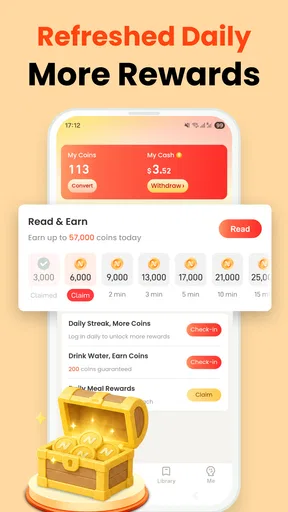
The app may reward users for activities such as reading chapters, checking in, completing in-app tasks, or participating in promotional events. Rewards are usually subject to specific conditions, minimum thresholds, and account verification. Before spending significant time in the app, review the current reward rules carefully, because points, bonuses, withdrawal methods, and availability can differ depending on your country.
Is Novelvio - Read & Earn free to download and use?
Novelvio - Read & Earn can generally be downloaded without an upfront purchase, but free access does not necessarily mean that every story, chapter, or feature is available at no cost. The app may include advertisements, optional purchases, subscriptions, or limits on reading and rewards. Check the store listing and in-app payment screens before confirming any transaction.
Can I withdraw the rewards earned in Novelvio?
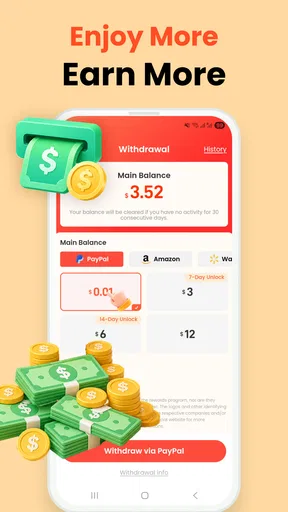
Withdrawal availability depends on the reward system supported in your version of Novelvio and your location. Some users may need to reach a minimum balance, complete identity or account verification, and select an approved payment method before requesting redemption. Read the withdrawal terms inside the app, including processing times, expiration rules, fees, and restrictions, before relying on the rewards as real income.
Is Novelvio - Read & Earn safe for my personal information?
As with any reading and rewards platform, you should review Novelvio’s privacy policy, requested permissions, and account requirements before registering. Avoid providing unnecessary sensitive information, and use a strong, unique password if an account is required. Download the application only from an official app store, keep it updated, and remember that reward-based services may collect usage, device, and advertising data.


